first time in japan?
Start here.
Planning Japan should feel exciting. And it is, right up until you've been through enough TikToks, Reddit threads, YouTube videos, Facebook groups, hotel searches, and Google Maps saves that it starts feeling like everyone's got a different answer.
This page is your calm starting point.
Not another overwhelming list of "must-dos." Just the basics that'll help you understand what actually matters, before you find yourself trying to squeeze the whole of Japan into one trip.
Read our Resources & Articles page for more Japan information!
the classic first time route - the golden route
Most first-time visitors start with the Golden Route: Tokyo, Kyoto, and Osaka, with the option to add Hiroshima and Miyajima if there’s enough time.
It’s popular for a reason. You get a mix of big city energy, food, shopping, culture, history, temples, nightlife, and easy train connections.
But popular does not mean one-size-fits-all.
A good route still depends on your trip length, pace, interests, budget, stamina, and how much moving around you actually want to do.
how would koko doko japan do the golden route?
If this were our own trip, we wouldn't try to cram the whole of Japan into ten days.. we've seen what that does to people, and it's not worth it.
We'd pick a route that actually flows, group areas that make sense together, and leave proper space between the big, busy days. Time for food you didn't plan for, wandering with no destination, a café you just liked the look of. That stuff matters just as much as the sights.
The classic route can still hit Tokyo, Kyoto, Osaka, maybe Hiroshima and Miyajima too, but it shouldn't feel like you're racing the clock the whole time.
That's the whole philosophy behind Koko Doko Japan, really: fewer rushed days, fewer "must-dos" you saved at 1am and forgot why, and a route that actually feels good to be on once you're here.

Tokyo
Tokyo is usually where first-time Japan trips begin: big city energy, endless food, shopping, neighbourhood exploring, day trips, nightlife, museums, cafés, and plenty of “how is this all one city?” moments.
Download Chloe & Rinto’s Tokyo GuideWhat it’s really like
Tokyo isn’t just one city centre.
It’s more like a collection of smaller cities stitched together by trains. Shibuya, Asakusa, Shinjuku, Ginza, Ueno and Harajuku all feel completely different.
Best known for
Contrast, food, shopping and neighbourhoods.
A quiet shrine can sit minutes away from neon screens, tiny bars, luxury shopping, vintage stores and some of the best casual food you’ll ever eat.
Common mistake
Trying to visit too many areas in one day.
Tokyo looks easy on a map until you factor in stations, walking, crowds and decision fatigue. Group nearby areas and leave space to wander.
Koko Doko tip
Don’t plan Tokyo like a checklist. Pick one main area for the day, add one nearby extra, and leave room for the random café, shop or street you didn’t know you’d love.
Osaka
Osaka is Japan’s loud, food-loving, easygoing city — perfect for street food, nightlife, shopping, theme parks, day trips and a more relaxed break after Kyoto’s temple-heavy days.
Download Chloe & Rinto’s Osaka GuideWhat it’s really like
Osaka feels more casual and playful.
Compared with Tokyo and Kyoto, Osaka can feel easier to wander. It’s great for food, shopping, nightlife and simple evenings where the plan is basically: eat well and enjoy the atmosphere.
Best known for
Dotonbori, street food and big nights out.
Think takoyaki, okonomiyaki, bright signs, busy shopping streets, Namba, Shinsekai, Universal Studios Japan and easy day trips to places like Nara or Kobe.
Common mistake
Treating Osaka like just a place to sleep.
A lot of travellers use Osaka only as a base for day trips, but it deserves its own time too — especially in the evening, when the food and nightlife areas really come alive.
Koko Doko tip
Use Osaka for food-focused evenings and easier, lower-pressure exploring. After busy Kyoto sightseeing days, Osaka is perfect for wandering, eating, shopping and letting the trip feel fun again.
Kyoto
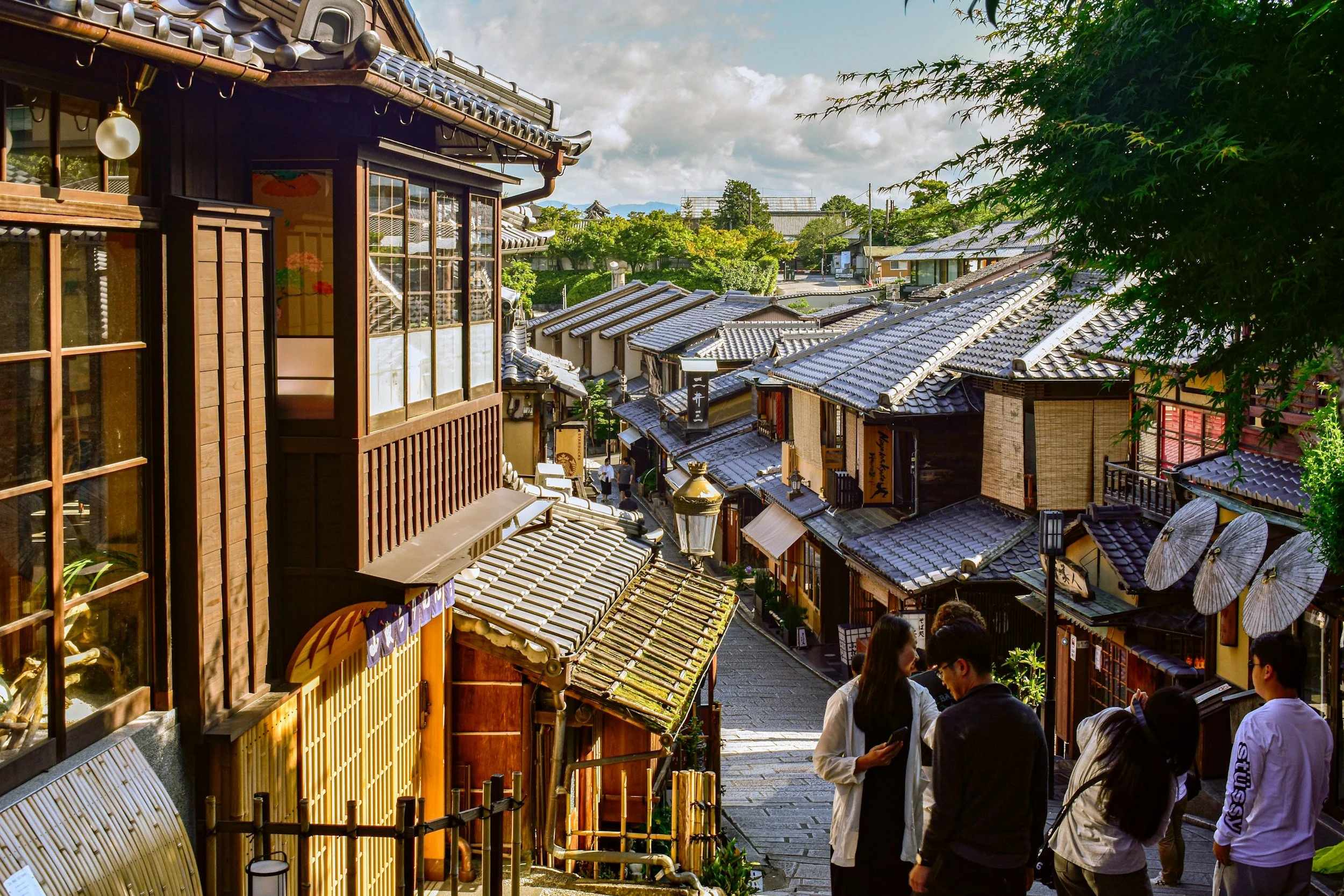
Kyoto is the city most people picture when they imagine traditional Japan — temples, shrines, quiet gardens, old streets, matcha cafés and beautiful scenery. It’s stunning, but it needs careful planning because the best areas are more spread out than people expect.
Download Chloe & Rinto’s Kyoto GuideWhat it’s really like
Kyoto is beautiful, but not always simple.
Kyoto feels slower and more traditional than Tokyo or Osaka, but the sightseeing areas are spread across the city. Buses, crowds and timing can make a big difference to how relaxed your day feels.
Best known for
Temples, shrines, gardens and old streets.
Think Fushimi Inari, Gion, Higashiyama, Kiyomizu-dera, Arashiyama, bamboo groves, tea houses, riverside walks, matcha and quieter traditional neighbourhoods.
Common mistake
Trying to do everything in one day.
Kyoto gets tiring fast if you jump between areas. Arashiyama, Fushimi Inari, Gion and Higashiyama can all be amazing, but not when they’re crammed together with no breathing room.
Koko Doko tip
Plan Kyoto by area, not by famous-name checklist. Pick one main area for the morning, one nearby area for later, and leave space for cafés, gardens and slower wandering — that’s usually when Kyoto feels best.
Hiroshima & Miyajima
Hiroshima and Miyajima add a slower, more meaningful side to the Golden Route — history, scenery, island views, great food and a different pace after Tokyo, Kyoto and Osaka.
Download Chloe & Rinto’s Hiroshima & Miyajima GuideWhat it’s really like
Calmer, emotional and scenic.
Hiroshima feels more relaxed than Japan’s biggest cities, while Miyajima gives you island views, shrines, deer, walking routes and a slower travel day that feels completely different.
Best known for
Peace Memorial Park, okonomiyaki and Miyajima.
Hiroshima is known for its history, Peace Memorial Museum, riverside walks and local-style okonomiyaki. Miyajima is famous for Itsukushima Shrine, the floating torii gate and mountain views.
Common mistake
Squeezing both into a rushed half-day.
Hiroshima and Miyajima can technically be rushed, but they feel much better with breathing room. The ferry, walking, museum time and food stops all take longer than people expect.
Koko Doko tip
If you have enough time, stay overnight in Hiroshima instead of treating it like a quick add-on from Osaka. It makes Miyajima easier, gives the Peace Memorial area proper time, and keeps the day from feeling like a train marathon.