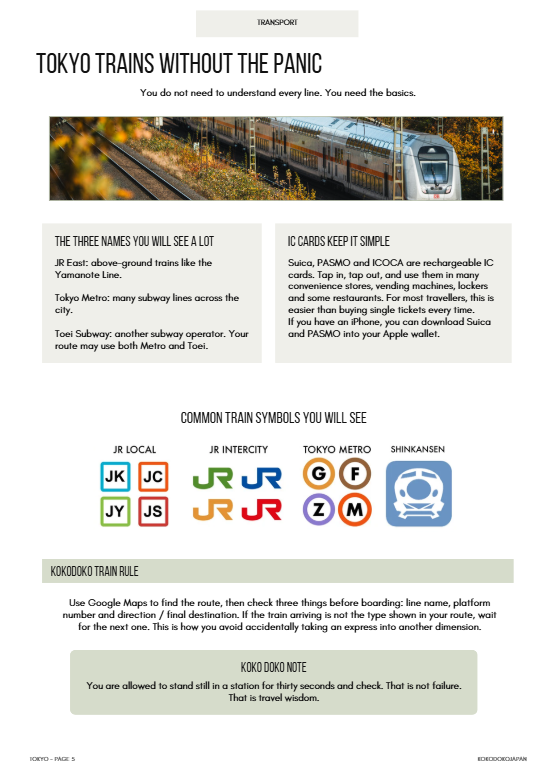
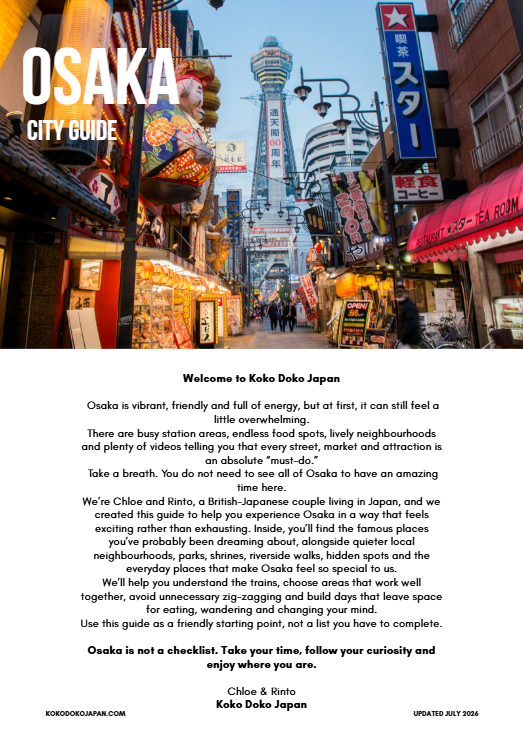
 Image 1 of 3
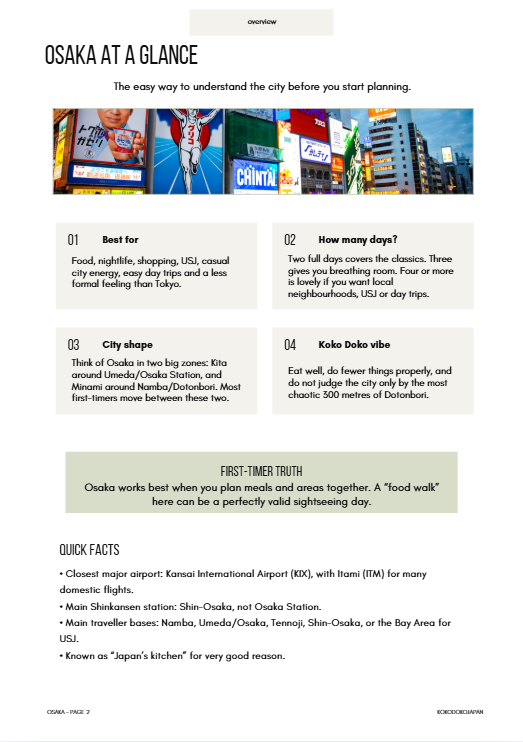 Image 2 of 3
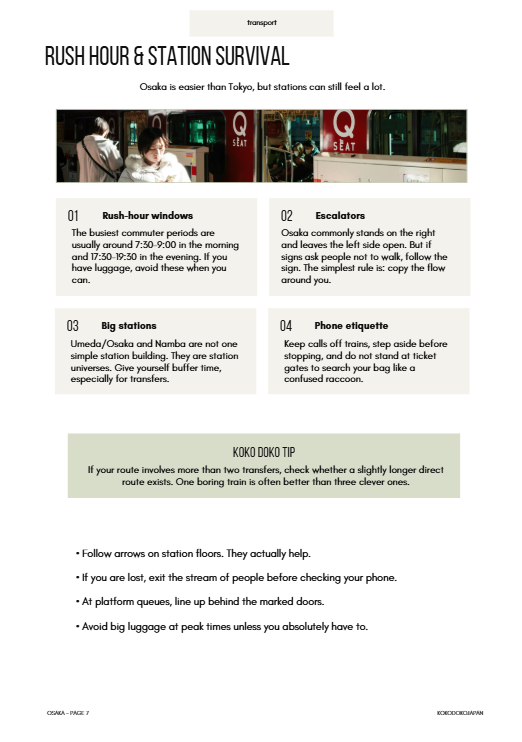 Image 3 of 3
Osaka doesn't ask you to be precious about it. It's loud, it's food-obsessed, and it's usually the city people fall for hardest once they stop treating it like a Kyoto detour.
This guide is our love letter to Japan's kitchen — built for first-time visitors who want to eat properly, wander without a rigid schedule, and actually understand how the city fits together before they land. No pretending you need five days of temples here. Osaka rewards a looser plan.
Instead of a flat list of sights, we group the city the way it actually works: by area, by energy level, and by how hungry you're likely to be.
What's inside:
A simple way to understand Osaka's shape — Kita/Umeda vs. Minami/Namba, and where Tennoji and the Bay Area fit in
Airports, trains, the "train code" (local, rapid, express, limited express) and rush-hour survival, explained without jargon
Five ready-made area blocks — Namba & Dotonbori, Umeda & Kita, Shinsekai & Tennoji, Osaka Castle & Riverside, Bay Area & USJ — each with a simple day shape
Where to stay, area by area, with the trade-offs actually spelled out
What to eat, from takoyaki and okonomiyaki to kushikatsu — plus a real cheat-sheet of everyday chains worth recognising on the street (Ichiran, Sukiya, CoCo Ichibanya and more)
Local neighbourhoods, parks, shrines and shopping beyond Dotonbori
Nightlife areas, from Ura-Namba's standing bars to Kitashinchi's more polished side
Easy day trips (Kyoto, Nara, Kobe, Himeji, Koyasan) — and a warning against turning your whole Osaka trip into someone else's itinerary
Sample 2-day and 3-day plans, common mistakes, and answers to the questions first-timers always ask
Written by Chloe and Rinto. This isn't generic internet advice. It's what we'd actually tell a friend before their first trip.
Busy is fine. Random is not.
Osaka doesn't ask you to be precious about it. It's loud, it's food-obsessed, and it's usually the city people fall for hardest once they stop treating it like a Kyoto detour.
This guide is our love letter to Japan's kitchen — built for first-time visitors who want to eat properly, wander without a rigid schedule, and actually understand how the city fits together before they land. No pretending you need five days of temples here. Osaka rewards a looser plan.
Instead of a flat list of sights, we group the city the way it actually works: by area, by energy level, and by how hungry you're likely to be.
What's inside:
A simple way to understand Osaka's shape — Kita/Umeda vs. Minami/Namba, and where Tennoji and the Bay Area fit in
Airports, trains, the "train code" (local, rapid, express, limited express) and rush-hour survival, explained without jargon
Five ready-made area blocks — Namba & Dotonbori, Umeda & Kita, Shinsekai & Tennoji, Osaka Castle & Riverside, Bay Area & USJ — each with a simple day shape
Where to stay, area by area, with the trade-offs actually spelled out
What to eat, from takoyaki and okonomiyaki to kushikatsu — plus a real cheat-sheet of everyday chains worth recognising on the street (Ichiran, Sukiya, CoCo Ichibanya and more)
Local neighbourhoods, parks, shrines and shopping beyond Dotonbori
Nightlife areas, from Ura-Namba's standing bars to Kitashinchi's more polished side
Easy day trips (Kyoto, Nara, Kobe, Himeji, Koyasan) — and a warning against turning your whole Osaka trip into someone else's itinerary
Sample 2-day and 3-day plans, common mistakes, and answers to the questions first-timers always ask
Written by Chloe and Rinto. This isn't generic internet advice. It's what we'd actually tell a friend before their first trip.
Busy is fine. Random is not.